 To moderate

Tour Packages in Puno, Peru
Season
March to December
Lake Titicaca – Puno Peru
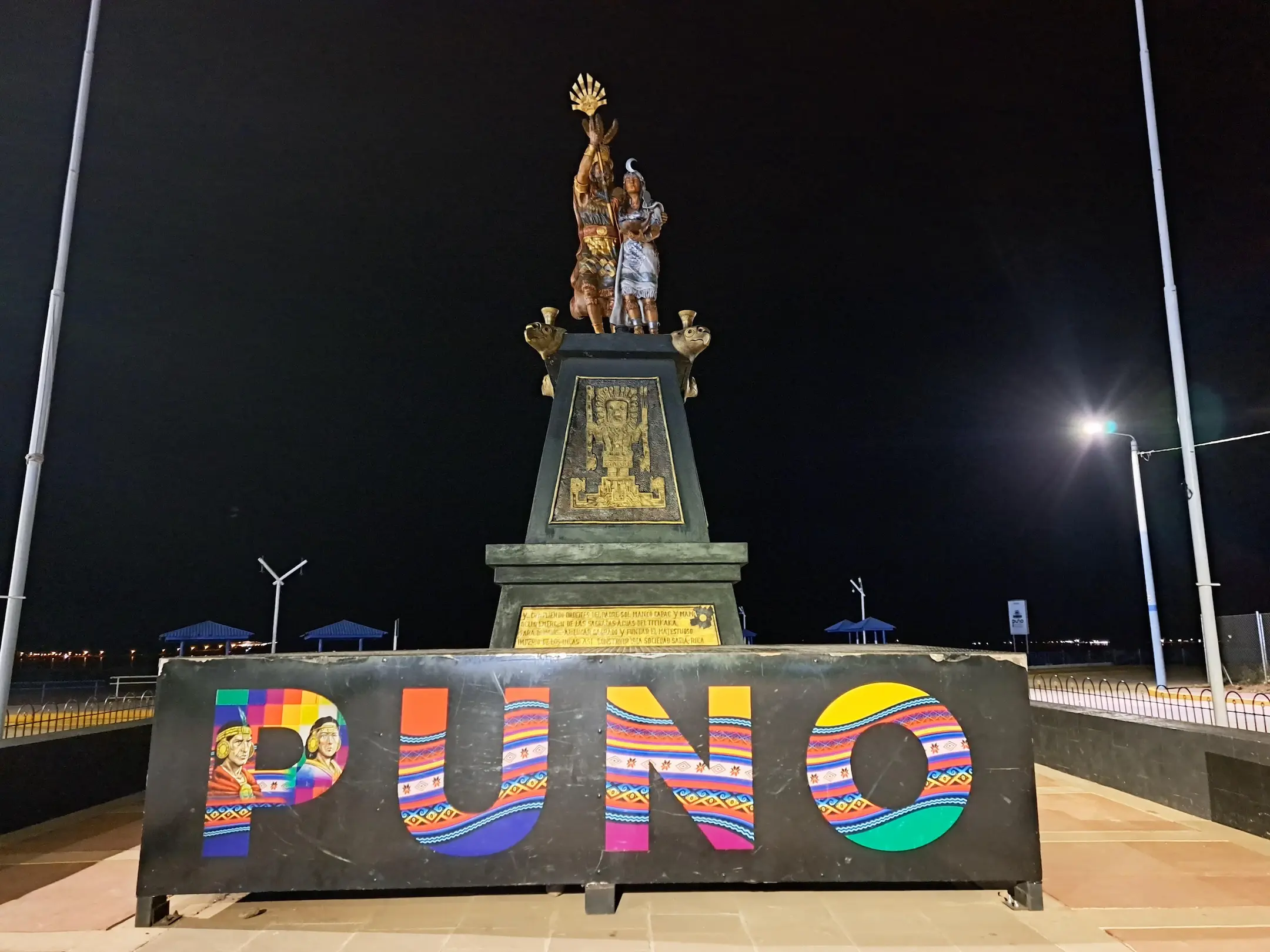
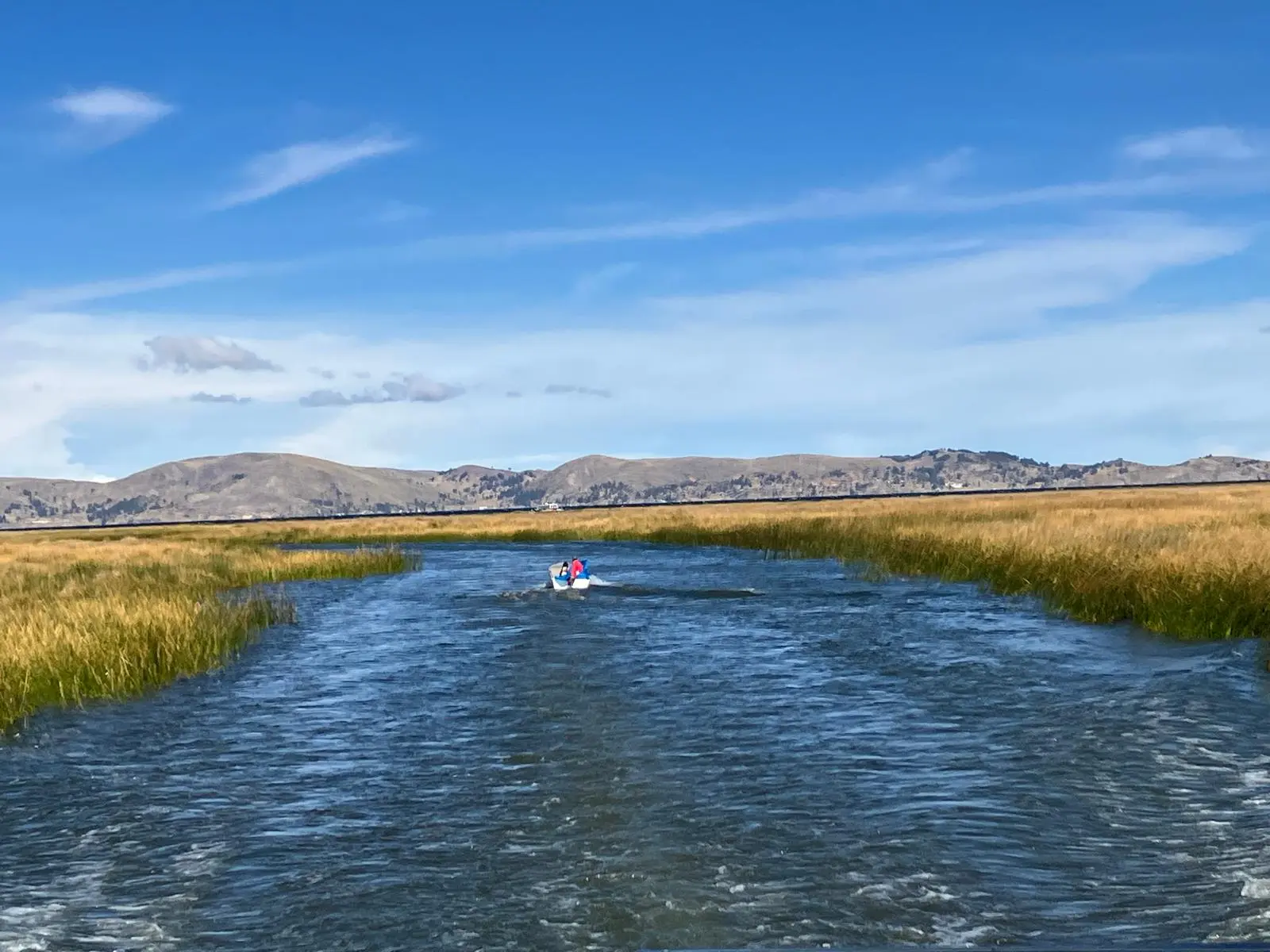
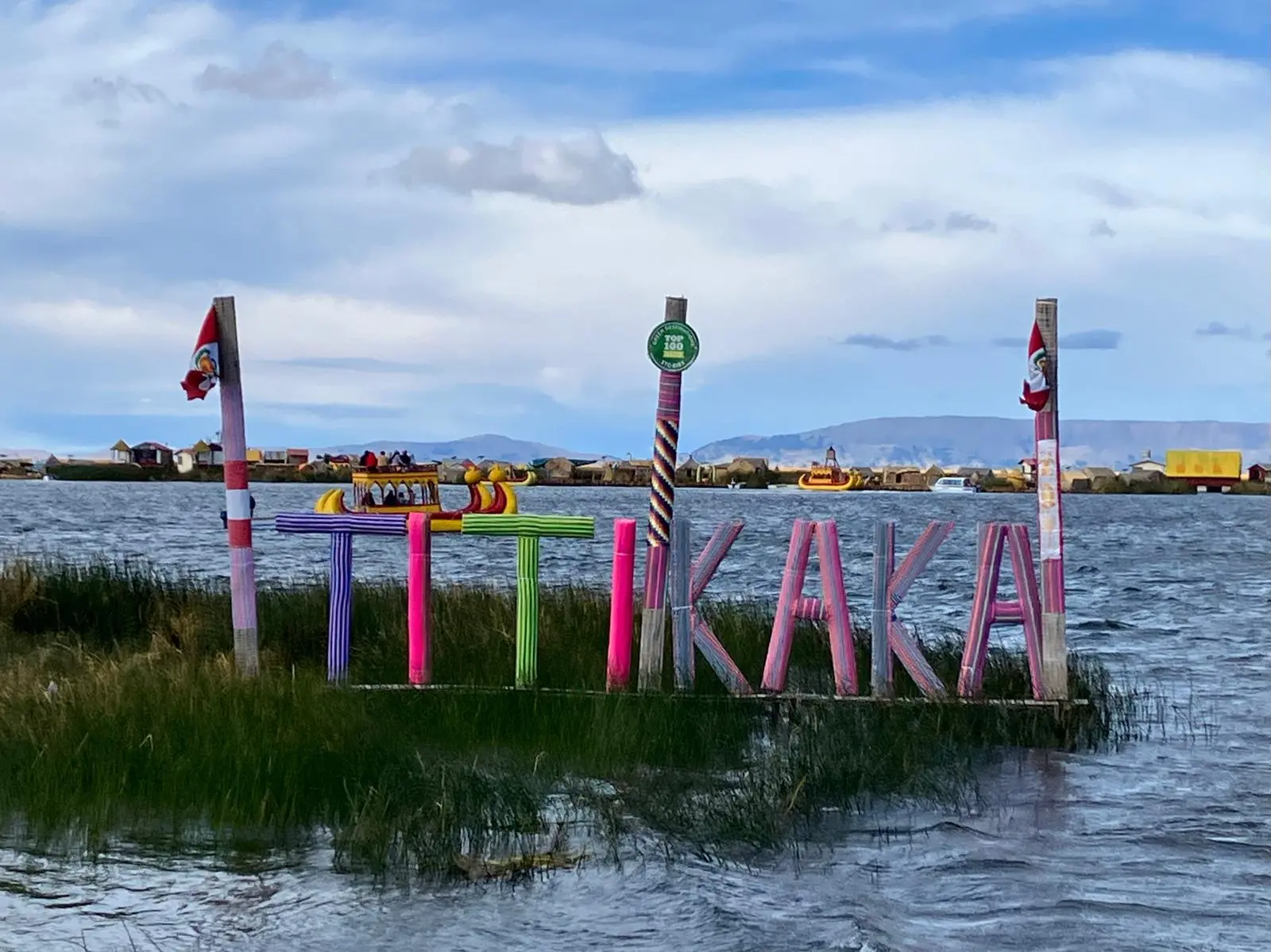
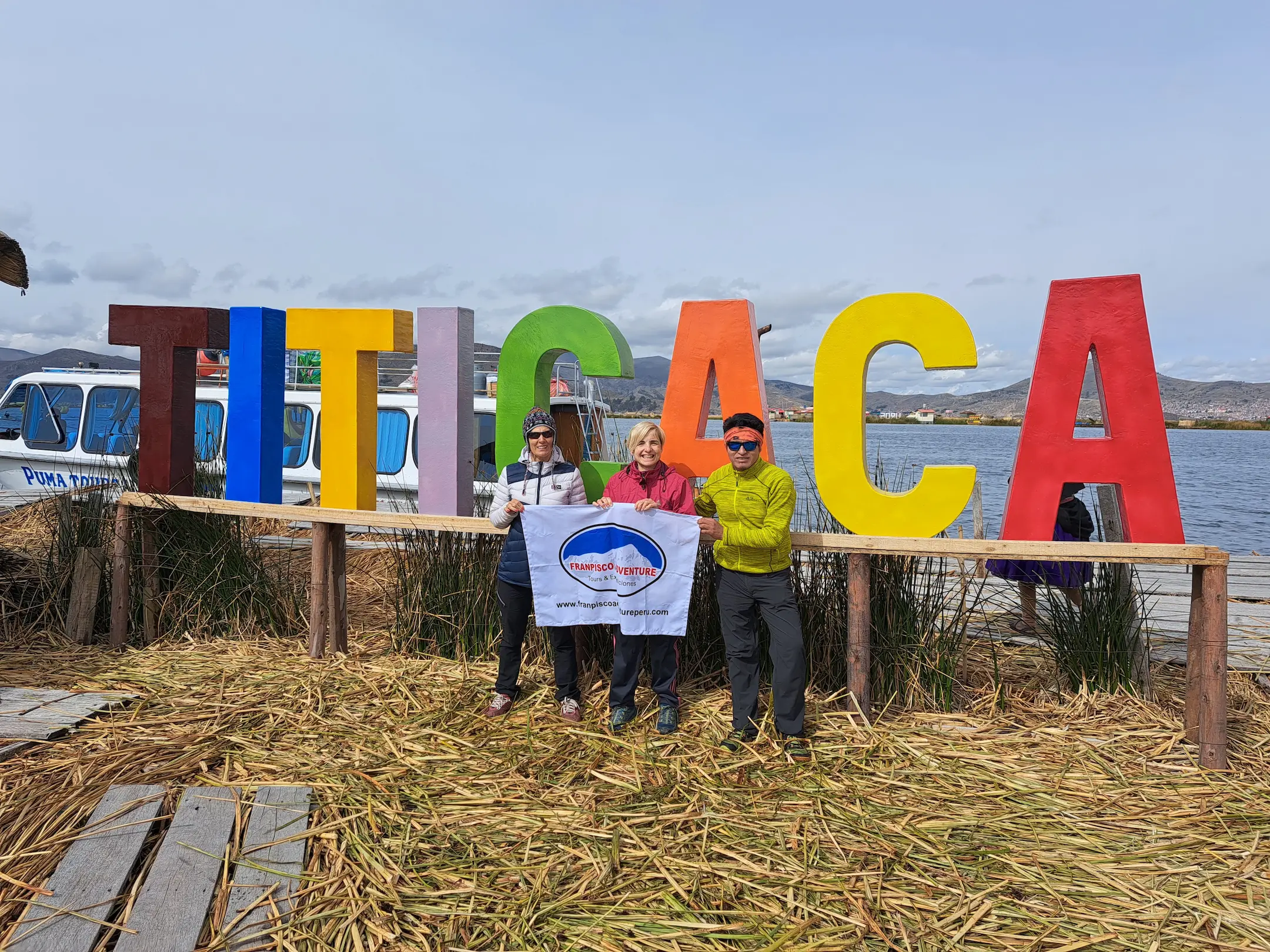
Lake Titicaca is the highest navigable lake in the world and serves as the natural border between Peru and Bolivia. This impressive mirror of water is situated in the Andean Altiplano. At an altitude of 3,812 meters above sea level, it is considered the highest freshwater navigable lake on Earth. It spans 8,562 km², with 56% belonging to Peru and 44% to Bolivia, and has an average depth of 107 meters. It is believed to be over 3 million years old, with more than 25 rivers flowing into it. Today, Lake Titicaca is a national reserve protected by the Peruvian government and is a top tourist destination in Puno (Peru) and Copacabana (Bolivia). This natural treasure is made up of the lake itself, a group of artificial floating islets, islands, and farming areas that perfectly express the harmony between the islanders and their environment. In ancient times, the islands were inhabited by numerous Andean cultures, including the Pucará, Tiahuanaco, and Inca. For this reason, it is known as the cradle of Peru's ancient civilizations. During the Inca period, the lake was sacred; according to mythology, Manco Cápac and Mama Ocllo, the founders of the Inca culture, emerged from its waters.
Uros Islands – Lake Titicaca – Puno Peru
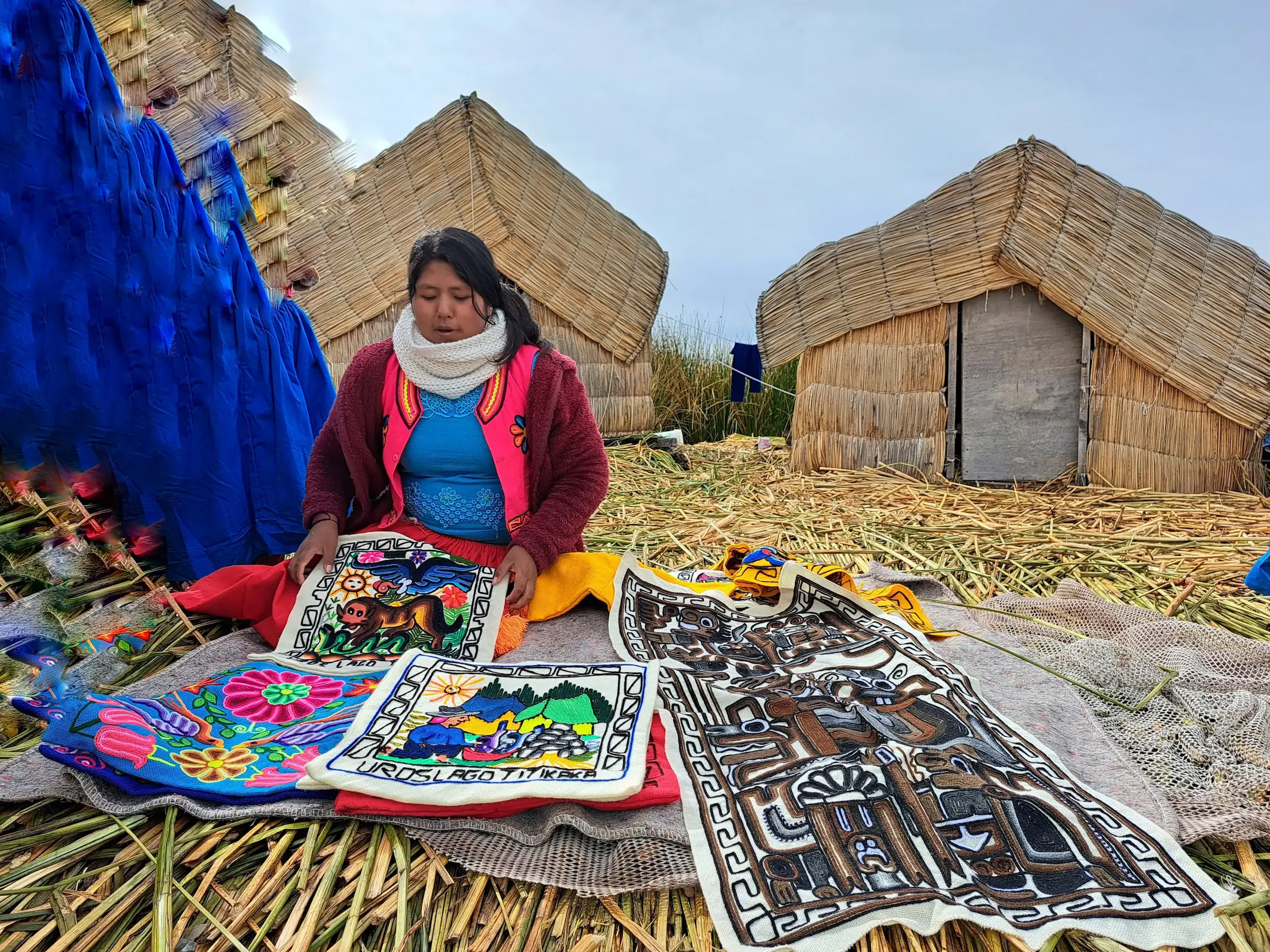
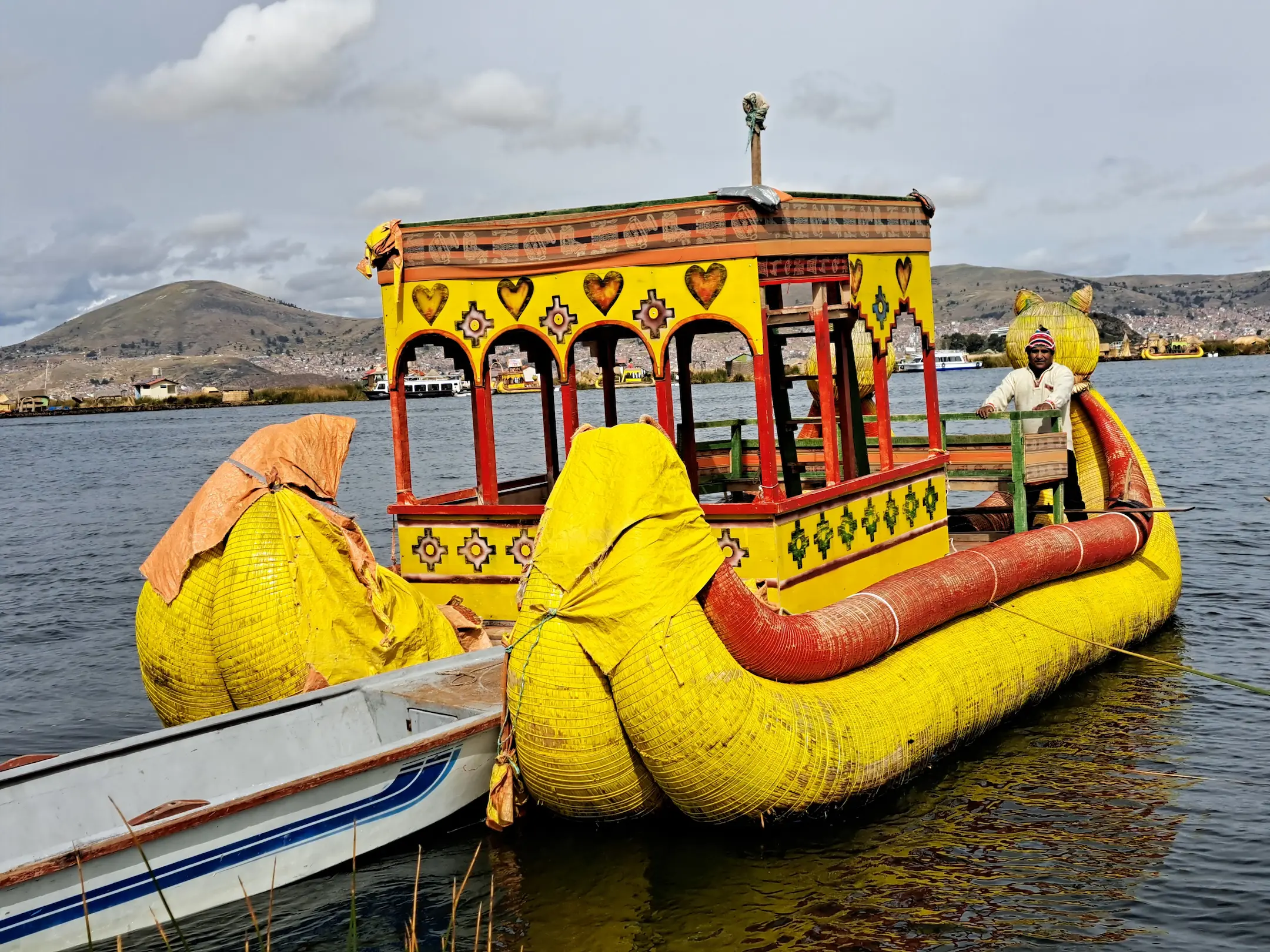
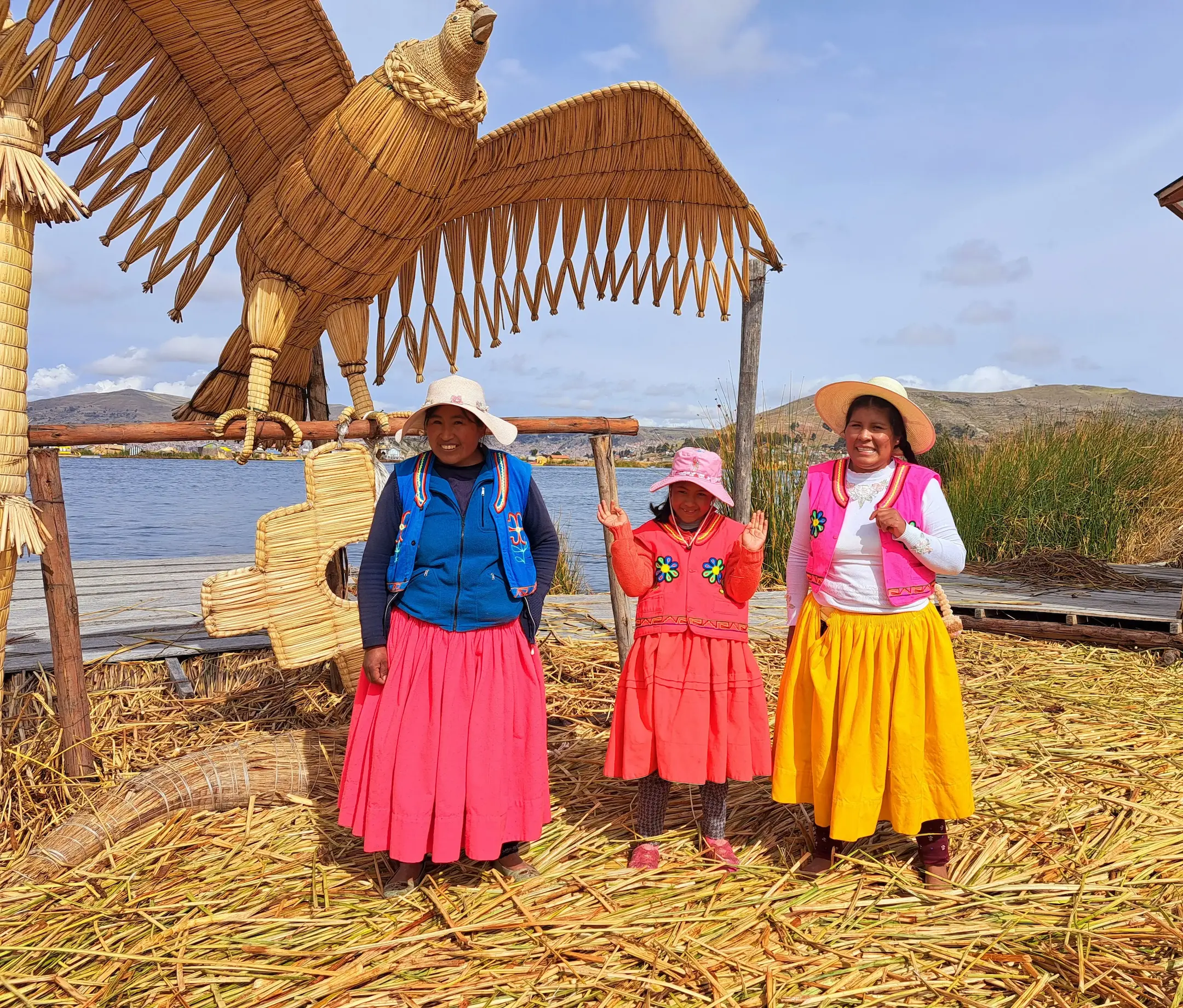
The Uros Islands, also known as the floating village in the heart of Lake Titicaca, are artificial islands made by the Uros people, an ancestral group that still inhabits this lake in small communities. The island platforms and houses are built with totora, an aquatic plant that grows in abundance around the lake. A floating island can last up to 20 years if properly maintained, though a new layer of totora must be added every 20 to 25 days to keep it afloat. To move between islands, the Uros use beautifully designed totora reed boats, some of which have two levels. On average, five to seven families live on each island, subsisting on fishing, hunting, and experiential tourism. Visitors can find original, colorful embroidery and totora handicrafts offered by the locals. According to chroniclers, the Uros were one of the first cultural formations of the Altiplano, dating back to pre-Inca times. While theories suggest they originated in Bolivia and migrated after droughts in the 10th and 13th centuries, they originally lived on dry land but chose to build floating islands to avoid conquest by the Tiahuanaco, Colla, and Inca. Finding ample resources for survival within the lake, they never returned to the mainland.
Sillustani Chullpas – Puno Peru
The Sillustani Archaeological Complex contains monuments linked to the funerary rituals of the Tiahuanaco, Colla, and Inca cultures. It is located 34 kilometers from Puno on the Umayo Lagoon Peninsula, at an altitude of approximately 4,000 meters above sea level. It is believed that the Chullpas, or circular stone towers, were built to house the remains of the main authorities of the Colla kingdom. Sillustani features around ninety chullpas shaped like inverted cones, masterfully joined and perfectly fitted together. These mausoleos stand up to 12 meters high and are characterized by a base smaller than the top. According to chroniclers, the mummified bodies of high authorities were placed inside these tombs along with their most valuable belongings—gold, silver, food, and ceramics—to ensure a better life in the hereafter. A site museum located near the complex preserves various pieces from the Colla, Tiahuanaco, and Inca cultures.
Amantani Island – Puno Peru
Amantani Island is the perfect place to experience ancestral customs, observe the lifestyle of the Altiplano people, and enjoy marvelous landscapes. This legendary island is located within Lake Titicaca at 3,817 meters above sea level, about 36 km northeast of the port of Puno. The travel time by motorized boat is approximately 3 hours. The island is known for its two viewpoints: the Coanas and Llacastiti hills, home to the ceremonial centers of Pachatayta and Pachamama, offering a view of the lake's full extent. The island is covered in native and medicinal plants like muña, cantuta, salvia, and patamuña. Amantani is home to ten communities engaged in agriculture (potatoes, corn, oca, and quinoa), stone carving, and textiles. Currently, it stands out as one of Puno's premier locations for experiential tourism.
Taquile Island – Puno Peru
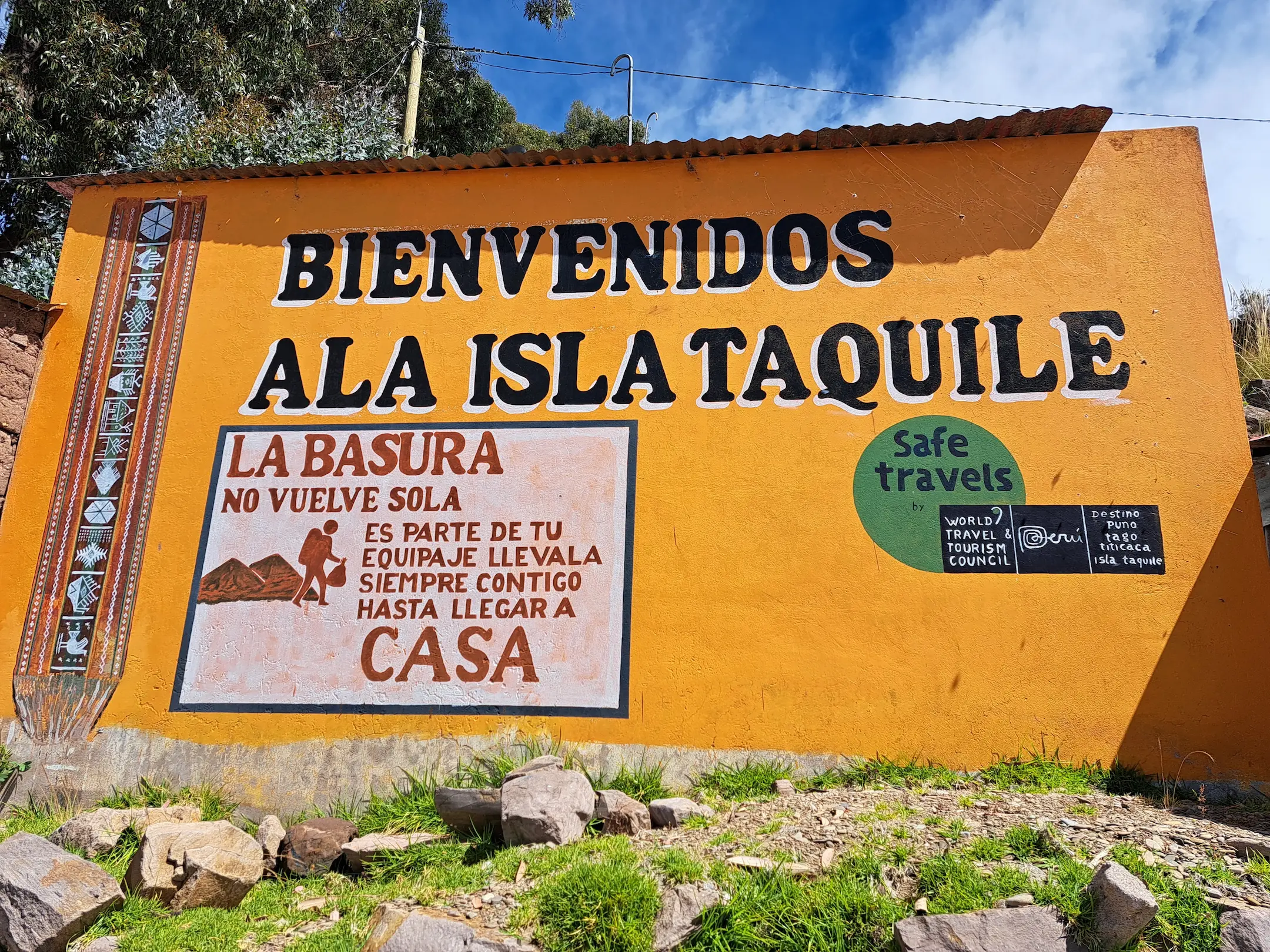
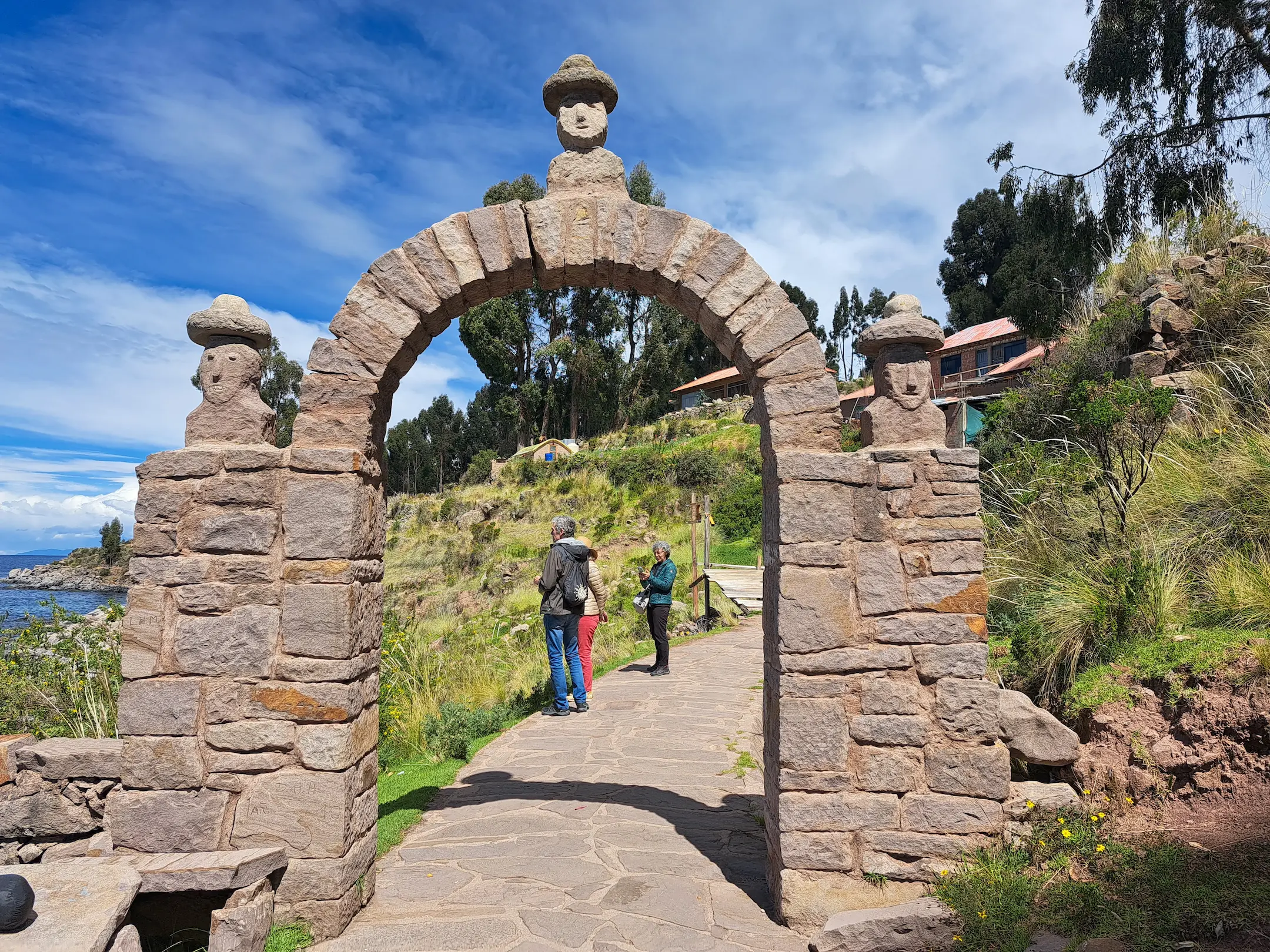
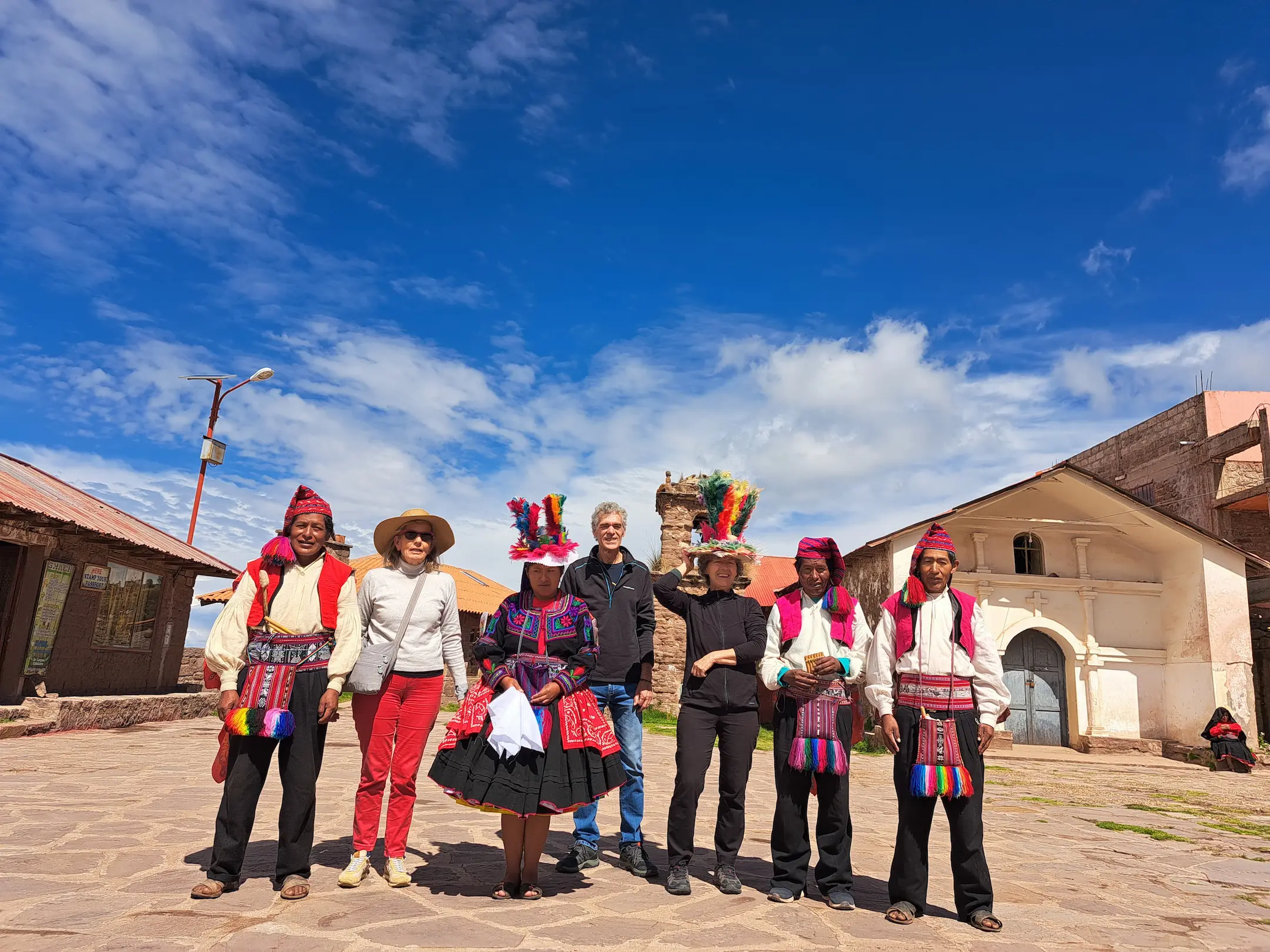
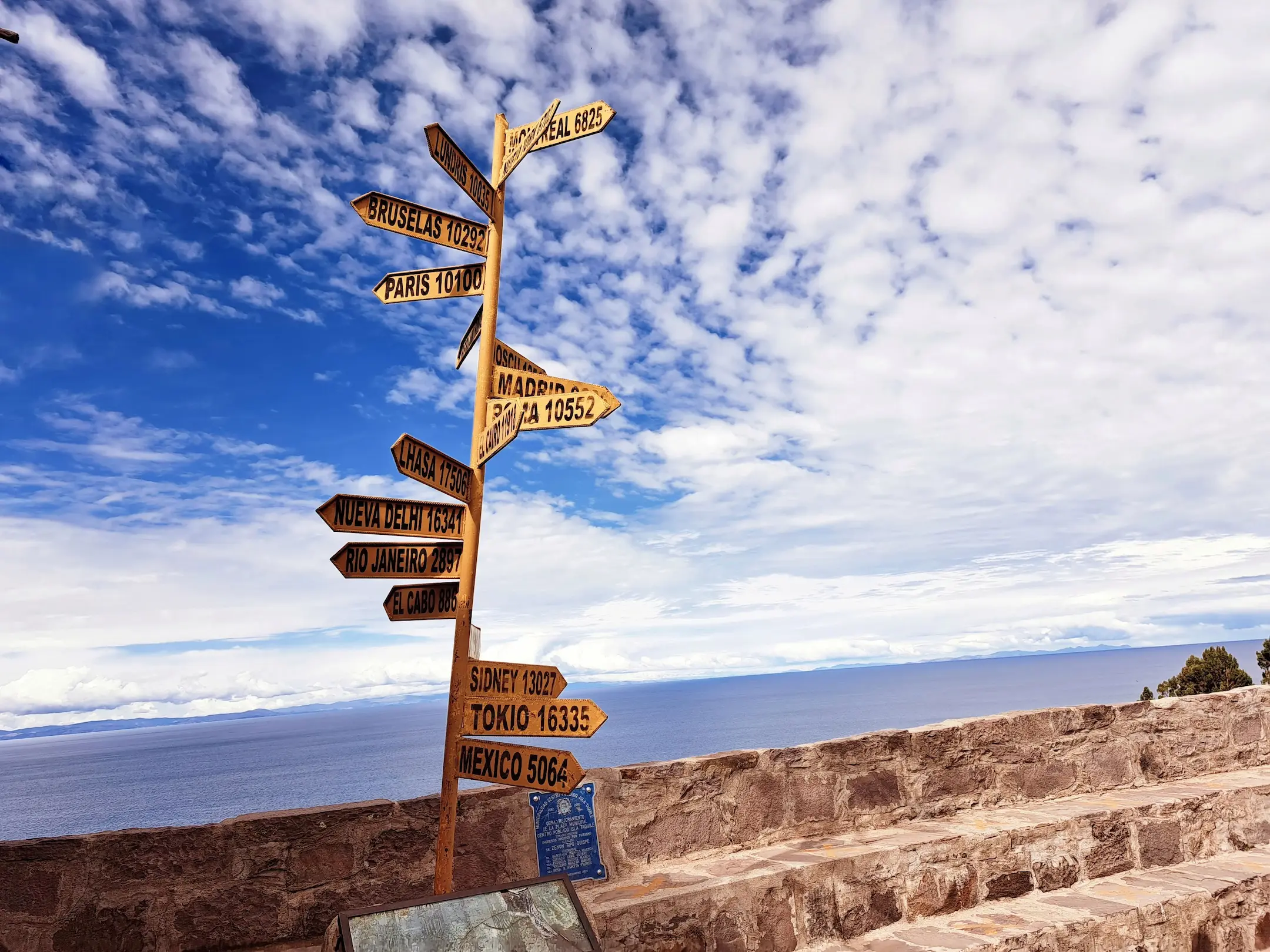
The beautiful Taquile Island is the largest island in Lake Titicaca. Famous for its pre-Inca remains and spectacular landscapes, it is home to Quechua-speaking islanders who practice fishing, agriculture, and textile production. They are characterized by a strong adherence to traditions and a deep sense of group identity, with most inhabitants marrying within the island community. Taquile has a fascinating textile tradition rooted in social customs. Men wear finely woven wool hats they make themselves; the color denotes social status—red for married men and red and white for single men. Taquile women wear traditional red blouses and multicolored skirts.
Chucuito – Puno Peru
The Chucuito Peninsula, also known as the 'City of the Royal Boxes' because it was a tax collection center during the colonial era, is located 18 km south of Puno. It is noted for its beautiful white sand beaches, unique landscapes, and natural viewpoints overlooking Lake Titicaca. In the rural community of Karina, visitors can participate in traditional activities and visit the Renaissance-style churches of Asunción and Santo Domingo, considered the finest colonial expressions in Chucuito. You can also visit the pre-Hispanic Inca Uyo, a rectangular construction from the Inca era known as a sacred place for ceremonies related to fertility.
Aramu Muru Portal – Puno Peru
The Aramu Muru portal, known as Hayu Marca (City of the Spirits) or Willka Uta (Gate of the Gods), is located 70 km south of Puno. It is a door carved into a single piece of rock, approximately 7 meters high. Aramu Muru is undoubtedly one of the most mystical and enigmatic energetic sites in Puno. Local legends say that during the Spanish invasion, the Inca priest Aramu fled Cusco with a golden solar disk and used it as a key to open and disappear through this portal. Today, thousands of travelers, historians, and locals visit this sacred door to pray, perform rituals, or seek positive energy. It is said that only gods enter through this gate, making a visit ideal for revitalizing the soul and mind, especially during the solstice on June 21, when festivities honor Pachamama, Tayta Inti, and the water.
Booking Conditions
We recommend making a reservation in advance to ensure a better price for you. Prices may vary according to the reservation date and the number of people. After we have reached an agreement on the total expedition price for each program we offer, you may book with a 40% deposit of the total agreed sum for the services.
This reservation will cover the following:
- Securing your spot for the scheduled date.
- Making transfer ticket reservations for Lima - Huaraz / Huaraz - Lima.
- Making hotel reservations for the scheduled dates of your arrival in Lima and Huaraz, according to the itinerary.
- Making reservations for guides, assistants, and/or staff for the scheduled date.
The remaining 60% will be paid in Huaraz after you have checked into your hotel. To begin the organization of your expeditions, please contact us for more information.
There are 02 rescue units in Huaraz
- National Police Rescue Squadron, based in the city of Yungay (very close to Huascarán mountain). Phone numbers: 043-493292 / 043-493333. They also have 02 helicopters available.
- Casa de Guías Rescue Unit, based in the city of Huaraz (Parque Ginebra s/n). The rescue cost must be budgeted beforehand, and if a helicopter is required, it will also be necessary to pay for the service in advance. Website: agmp.pe
For more information, please contact us.
Reservation Form
Price from:
$--
€0
Related Tours
Discover other experiences that might interest you
To moderate
 N/A
N/A
 N/A
N/A
 N/A
To moderate
N/A
N/A
N/A
N/A
To moderate
N/A
N/A
N/A